Views
617
Every year on World Elephant Day, we celebrate these gentle giants that shape forests and cultures alike. But in Jharkhands Dalma Wildlife Sanctuary and its surrounding foothills, Asian elephants are struggling to survive.
Their forest corridorscritical for food, shelter, and migrationare shrinking due to deforestation, mining, and human expansion. This has forced them into farmlands, sparking conflict with local communities.
Our Trees for Elephants® project is addressing this crisis by restoring these vital green corridors. Through carefully planned tree plantations, we are ensuring elephants can move safely between forest patches while meeting their nutritional needs, reducing the need to raid crops, and helping people and wildlife live in harmony.
According to the Wildlife Trust of India, Central India holds less than 10% of the countrys elephant population but accounts for nearly 45% of human deaths caused by elephants. The disruption of natural routes has left elephants with fewer safe paths, pushing them into human settlements.
Wildlife corridorsstrips of forest connecting larger habitatsare the lifelines that keep elephant populations healthy and reduce conflict. Our plantations aim to repair and strengthen these corridors in the semi-arid landscapes of Jharkhand, a region well suited to tree growth.
Elephants spend up to 19 hours a day feeding and can eat nearly 150 kilos of plant material daily. Their diet includes more than 100 species of plants, with a special fondness for fruits and flowers like mango and mahua. They also act as master seed dispersers, helping forests regenerate naturally.
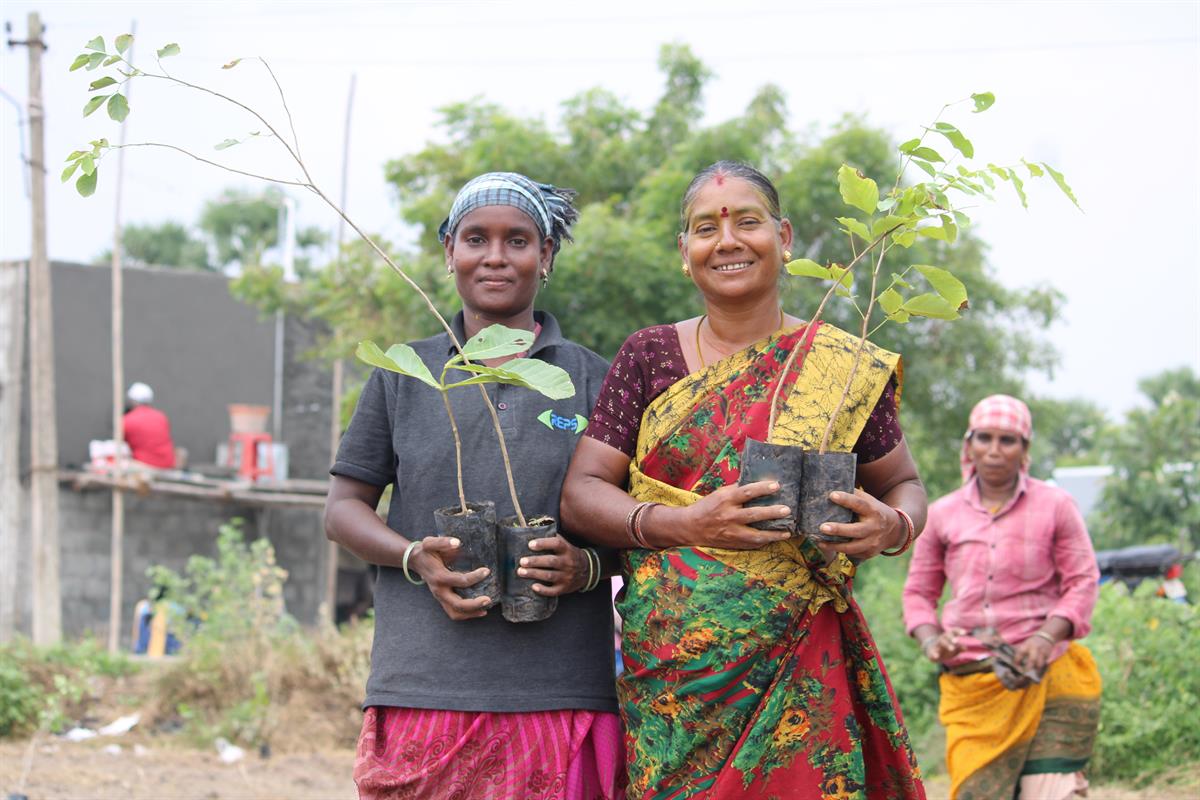
For this project, we have chosen species they love: Mango, Mahua, and Jackfruit for fruits and flowers; Teak for its bark; Shisham, Semal, and Jamun for leafy meals. We also include Neem, Nimbu, Sarifa, Karanj, and Acacia, which benefit both elephants and local communities by providing fodder, fuel, and livelihood resources.
Our work does not stop at planting. We involve local communitiesespecially womenin the process, creating jobs and ensuring fair pay.
By adding contour trenches and ponds, we improve soil moisture, recharge groundwater, and boost agricultural potential. The result is a stronger local economy and a healthier environment.
The Trees for Elephants® project is more than a conservation effortit is a bridge between species. It protects elephants, sustains human livelihoods, and restores the land we all depend on.
This World Elephant Day, remember: protecting elephants begins with protecting their forests. And protecting their forests begins with planting the right trees in the right places.
Subscribe to our newsletter and recieve a selection of our cool articles every week.
Forest Conservation in India: What Happens When the Trees Are Gone?
Forest Conservation in India: What Happens When the Trees Are Gone?
Feb 06, 2026
Copyrights @ 2025 All rights reserved by Pangea EcoNetAssets Pvt Ltd.